
How to Choose the Right Brow Treatment: Shaping, Tinting or Lamination?
Not sure which brow treatment is right for you? You are not alone.
With brow shaping, tinting, lamination, and other professional treatments available, it can be difficult to understand what each procedure actually does — and which one will give you the result you want.
The right choice depends less on current beauty trends and more on your natural brow shape, hair colour, density, growth direction, and personal preferences.
Some people simply need a little shaping. Others want more definition because their brow hairs are very light. If the hairs grow downward or in different directions, a treatment that changes their appearance and direction may be more appropriate.
This guide explains the main differences between popular brow treatments and helps you decide where to start.
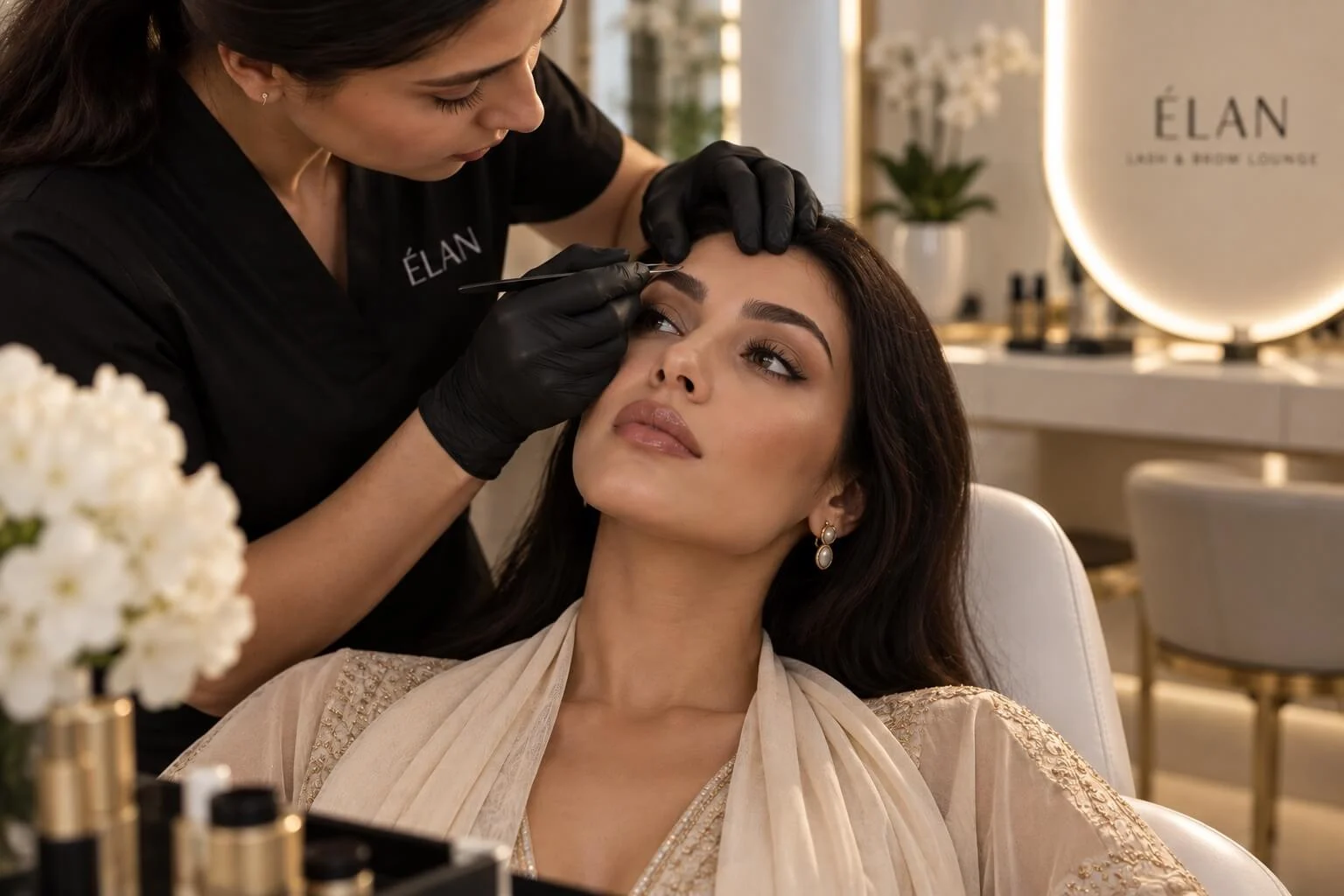
What do you want to change about your brows?
Before choosing a treatment, think about the result you actually want.
Do your brows look messy but have good density? Are they too light? Do you spend several minutes every morning filling them in? Or do the hairs grow in different directions and refuse to stay in place?
These are very different concerns, so they may require different approaches.
As a simple starting point:
- Want a cleaner shape? Consider brow shaping.
- Want more colour and definition? Consider brow tinting.
- Want both shape and definition? Shaping and tinting can be combined.
- Want the hairs to look lifted and more uniform? Brow lamination may be a better option.
- Want the most natural enhancement possible? A subtle shaping or tinting treatment may be enough.
A professional brow specialist can also assess your natural brows and help you decide which approach makes sense for your features.
Brow shaping: best when the shape is the main concern
Brow shaping focuses on the outline and proportions of your eyebrows.
During the treatment, unwanted hairs are removed to clean up the brow and create a more balanced appearance. Depending on the brows and the specialist’s technique, shaping may involve waxing, threading, or tweezing.
Brow shaping may be right for you if:
- your brows have become overgrown;
- you have visible stray hairs;
- the natural shape is difficult to define;
- your eyebrows look uneven;
- you want a cleaner appearance without changing the colour;
- you are growing out your brows after over-plucking.
The goal of professional shaping is not necessarily to make the brows dramatically thinner or create an exaggerated arch.
In many cases, the best result comes from working with the natural brow line and removing only what is necessary to improve its definition.
Does brow shaping change your facial appearance?
It can.
Eyebrows frame the eyes and influence how facial proportions are perceived. Even a relatively small change in the brow line can make the eyes look more open or the overall face look more polished.
This is why brow shaping should be approached individually rather than following a single brow shape that is supposed to work for everyone.
Brow tinting: best when your brows need more definition
Brow tinting changes the colour and visual definition of the brow hairs.
It can be particularly useful for people whose eyebrows are naturally light, uneven in colour, or difficult to see without makeup.
Tinting does not create new brow hairs, but adding colour to existing hairs can make the brows appear more visible and defined.
Brow tinting may be right for you if:
- your natural brow hairs are very light;
- your eyebrows disappear visually without makeup;
- you want more definition without using a pencil every day;
- your brow hairs have an uneven colour;
- you want your brows to appear fuller without changing their structure.
The result can range from very subtle to more defined, depending on the colour selected and the desired look.
Can brow tinting look natural?
Yes — when the colour and intensity are properly matched to the individual.
A common concern is that tinted brows will look too dark or harsh. This is why professional tinting should not simply involve applying the same colour to every client.
The specialist should consider your natural brow colour, hair colour, skin tone, brow density, and the result you want.
For a natural look, the objective is usually to enhance what is already there rather than make the brows look artificially drawn on.
Brow shaping and tinting: when you want both
Sometimes the issue is not just shape or colour — it is both.
For example, your eyebrows may have a good natural structure but contain lighter hairs that make the shape difficult to see. Or the hairs may be visible but the brow line has become untidy.
In these situations, combining shaping and tinting can make sense.
Shaping refines the outline, while tinting enhances the colour of the existing hairs.
The combination may help create:
- a cleaner brow line;
- more visible definition;
- a fuller-looking appearance;
- better visual balance between the eyebrows;
- less reliance on daily brow makeup.
It is particularly useful when you want your brows to look polished while still maintaining a natural appearance.
Brow lamination: best when hair direction is the problem
Brow lamination works differently from shaping and tinting.
Instead of primarily focusing on removing hairs or adding colour, lamination changes the appearance and direction of the existing brow hairs.
The hairs are professionally treated and styled so they can appear more lifted, brushed-up, and uniform.
Brow lamination may be worth considering if:
- your brow hairs grow downward;
- individual hairs point in different directions;
- your brows are difficult to style;
- you want a brushed-up appearance;
- you want the hairs to look more uniform;
- you like the appearance of fuller, lifted brows.
Lamination can make existing brow hairs more noticeable because of the way they are positioned.
However, it is not necessarily the best solution for everyone.
If your main concern is simply that your brows are too light, for example, changing the direction of the hairs may not address the problem as effectively as tinting.
Brow shaping vs. tinting vs. lamination
The easiest way to understand the difference is to look at what each treatment is designed to change.
| Treatment | Main focus | May be suitable if you want |
|---|---|---|
|
Brow shaping |
Shape and outline |
Cleaner, more balanced brows |
|
Brow tinting |
Colour and definition |
More visible, defined brow hairs |
|
Shaping + tinting |
Shape + colour |
Defined and polished brows |
|
Brow lamination |
Hair direction and appearance |
Lifted, brushed-up, more uniform brows |
These treatments can also address different concerns at the same time.
For example, someone with light and unruly brows may benefit from a combination of shaping, tinting, and another styling approach, depending on their natural hair characteristics and desired result.
What brow treatment is best for sparse eyebrows?
Sparse eyebrows can be challenging because different types of sparseness require different solutions.
If you have plenty of fine, light hairs but they are difficult to see, tinting can make them more noticeable.
If the brows are sparse because of an uneven shape or excessive hair removal, careful shaping may help create a cleaner outline while preserving as much natural hair as possible.
If the hairs are present but grow in different directions, lamination may make the brow appear more organized and visually fuller.
The key point is that “sparse brows” is not one specific problem. The best treatment depends on why the brows look sparse in the first place.
What brow treatment is best for a natural look?
If your priority is a natural result, start by deciding what you actually want to change.
You may not need a dramatic treatment at all.
A small amount of professional shaping can be enough if your brows are already naturally full and well-coloured.
If your shape is good but the hairs are light, a subtle tint may provide the definition you are looking for.
If your brows are difficult to control because the hairs grow in different directions, lamination may be appropriate — although the final effect will be more noticeable because the direction of the hairs is being changed.
A natural-looking result usually comes from enhancing the characteristics you already have rather than completely changing them.
How does your face shape affect your brows?
Your face shape can be useful when considering your brow design, but it should not be treated as a strict formula.
You may have heard rules such as “round faces need high arches” or “long faces need flatter brows.” These guidelines can provide a starting point, but your natural brow structure and individual facial features are equally important.
A professional specialist considers the entire face rather than applying one predetermined shape.
Round face
A slightly more defined arch can help add visual structure, but the shape should still look natural.
Oval face
Many brow shapes can work well with an oval face. Maintaining balanced proportions is usually more important than creating a dramatic arch.
Long face
A softer, more horizontal brow shape can help create visual balance.
Square face
A softly defined arch can complement stronger facial features without making the brows appear overly sharp.
Heart-shaped face
A balanced, softly curved brow can complement the upper part of the face without creating excessive emphasis around the forehead.
These are general principles, not strict rules. Your natural brow line should always be part of the decision.
Why shouldn't you choose a brow shape from a photo?
Saving a photo of your favourite brows can be useful for explaining the style you like.
However, copying another person’s brow shape exactly is rarely the best approach.
Two people can have completely different:
- facial proportions;
- eye shapes;
- brow bone structures;
- natural brow density;
- hair growth patterns;
- brow thickness.
A shape that looks balanced on one person may look unnatural on another.
Instead of asking for “the same brows as this photo,” it can be more helpful to show the specialist the type of result you like — soft, defined, lifted, natural, full, or polished.
How often should you have your brows professionally treated?
There is no universal schedule because brow hair grows at different rates.
Shaping is generally repeated when enough new growth appears to affect the outline.
Tinting gradually fades as the colour wears away and the brow hairs go through their natural growth cycle.
Lamination usually requires a longer interval because the treatment affects the appearance and direction of the brow hairs.
Your specialist can recommend an appropriate maintenance schedule based on your brows and the specific treatment you choose.
What should you consider before booking a brow treatment?
Before making an appointment, consider three things.
1. Your starting point
Look at your brows without makeup. Are they mainly too light, too long, uneven, sparse, or difficult to control?
Identifying the actual problem makes it easier to choose an appropriate treatment.
2. Your desired result
Think about whether you want:
- barely noticeable enhancement;
- natural definition;
- a polished everyday look;
- stronger, more visible brows;
- lifted and brushed-up hairs.
The more clearly you can describe the desired result, the easier it is for your brow specialist to tailor the treatment.
3. Your maintenance preferences
Some people are happy to spend time styling their brows every morning. Others want to wake up with brows that already look defined.
Your daily routine can therefore be just as important as the appearance you want.
Professional advice can make the choice easier
There is no universal “best brow treatment.”
The right option depends on what you already have and what you want to improve.
If your brows mainly need a cleaner outline, shaping may be enough. If colour is the main issue, tinting can provide additional definition. If both shape and colour need attention, combining the two treatments can be a practical choice.
And if your main concern is the direction of the brow hairs, lamination may be worth considering.
At ÉLAN Lash & Brow Lounge in Dubai, brow specialists can assess your natural brows and help determine which treatment is most appropriate for the result you want.
If shaping and tinting sounds like the right option for your brows, you can learn more about the Brow Shaping & Tinting treatment at ÉLAN Lash & Brow Lounge before booking your appointment.
The best brow treatment is the one that solves your actual brow concern
Brow trends change, but your natural features do not.
Instead of choosing a treatment simply because it is popular, start with a more useful question:
What exactly do I want to change about my eyebrows?
Once you identify the problem — shape, colour, density, direction, or daily maintenance — choosing the right treatment becomes much easier.
The goal is not to make every brow look the same. It is to find the treatment that enhances your natural features and gives you a result that feels comfortable, balanced, and easy to maintain.


Flawless results.